2026-03-31
Intermittent catheterization is regarded as the "gold standard" for dealing with neurogenic bladder dysfunction. During intermittent catheterization, the catheter is generally inserted smoothly, but occasionally there may be difficulties in insertion. The causes of insertion difficulties and the solutions are as follows
The common situations of difficult intubation in clinical practice are as follows:
1. Failure to locate the urethral opening properly, resulting in the inability to insert the urinary catheter into the urethra;
2. Inappropriate operation leading to difficult intubation. For example, the urinary catheter is either too thick or too thin; the lubrication of the urinary catheter is insufficient; male patients do not adjust to the appropriate intubation angle, and due to physiological curvature, the intubation is not smooth.
3. Urethral obstruction. Urethral obstruction is the most common cause of difficulty in catheterization, including urethral stenosis, urethral calculi, prostate hyperplasia, etc.
4. Patient's emotional tension. Excessive tension during intubation may cause urethral spasm, making it difficult for the urinary catheter to pass through.
The solutions for each situation are as follows
1. Accurately identify the external urethral orifice
For the majority of patients, the external urethral orifice is easily identifiable. However, for elderly female patients, those with fused labia minora, those with an ectopic external urethral orifice, those with lesions around the urethra, and those with partial phimosis, it may be difficult to locate the correct external urethral orifice. We need to carefully identify it. For patients with fused labia minora, we should first separate them. For those with phimosis, we must be clear that the foreskin opening is not the external urethral orifice. If we blindly insert the urinary catheter, it is likely to get stuck at the glans of the penis. It is best to flip the foreskin up so that the foreskin tightly adheres to the glans and exposes the external urethral orifice, without leaving any gap between the foreskin and the glans. If necessary, we can slightly separate the foreskin opening.
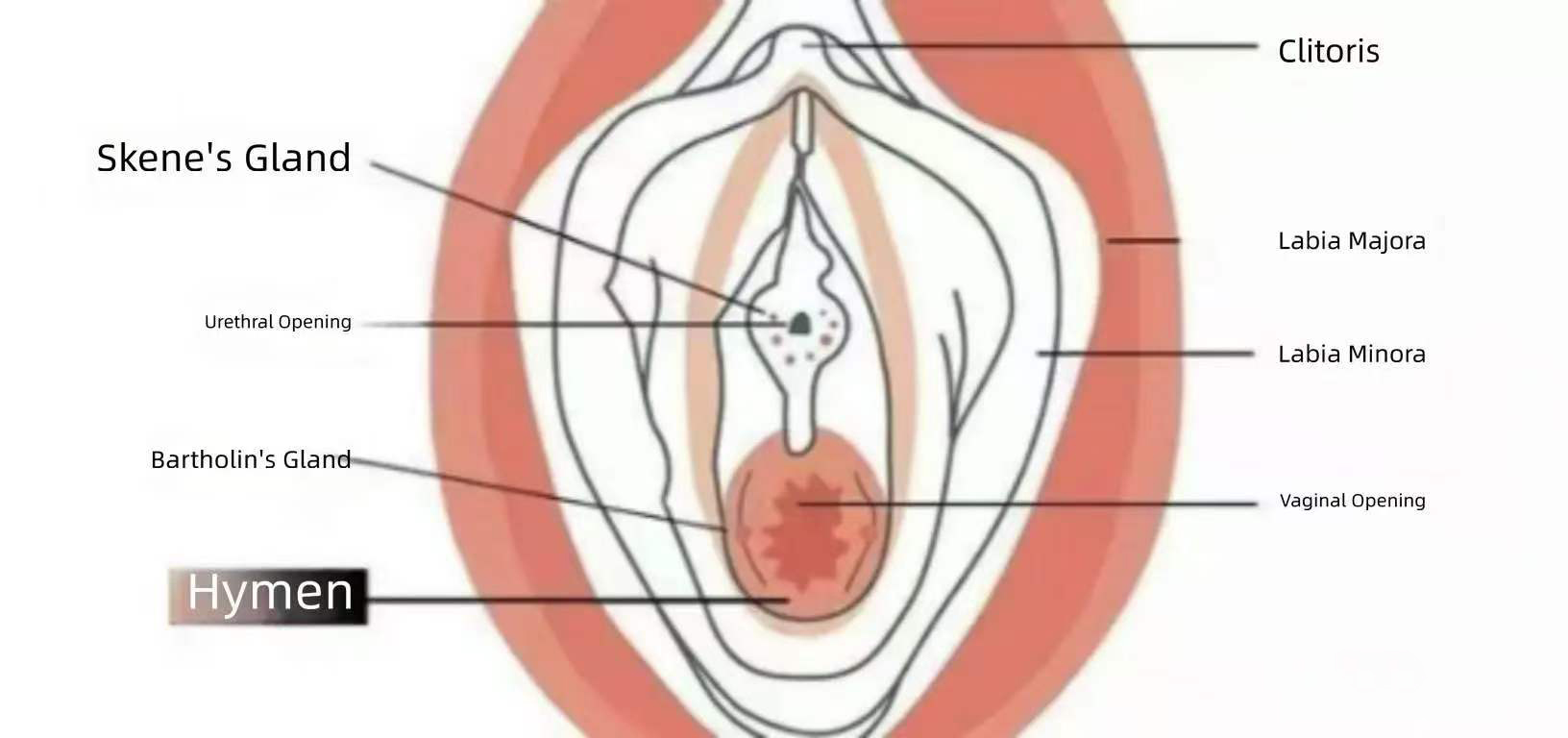
The female urethra is located behind the pubic symphysis, being short and straight. Its normal urethral opening is 2 to 2.5 cm anterior to the vestibule, before the vagina and behind the clitoris. It is a sagittal fissure, surrounded by raised areas in a nipple-like shape. In elderly women, due to the relaxation of the muscles in the perineum, the urethral opening may retract. The vagina is a tube composed of mucous membrane and muscle. Non-elderly women's vaginas have many longitudinal folds and elastic fibers covering them, and there is a circular cross-muscle at the vaginal opening. Estrogen deficiency can cause atrophy of the urogenital tract. After women enter old age, estrogen secretion decreases, and at the same time, muscle and connective tissues tend to atrophy, resulting in vaginal atrophy. The atrophied vagina pulls the retracted urethral opening, causing it to gradually become smaller and sink into the anterior wall of the vagina.
The content of this article is sourced from the internet. The author assumes no responsibility for it. Without permission, copying is strictly prohibited.
|

浙公网安备33021202001967号